

Invitation to the Dance II:
Daphnis et Chloé - Maurice Ravel's "Choreographic symphony." Return to Series Overview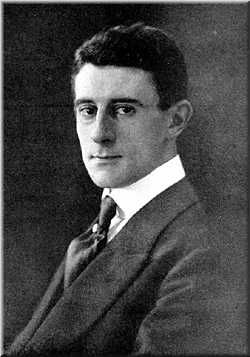
Maurice Ravel in 1913

Pictured: Daphnis et Chloé (1743) by French painter Francois Boucher.
One of the most beautiful products of French Music.
– composer Igor Stravinsky
Rhythm stirs our bodies. Tonality and melody stir our brains. The coming together of rhythm and melody bridges our cerebellum (the motor control, primitive little brain) and our cerebral cortex (the most evolved, most human part of our brain). This is how Ravel’s music moves us, both metaphorically and physically, exquisite unions of time and melodic spaces.”
– Daniel Levitin, author, This is Your Brain on Music
Our story beings in Paris in 1909, when 34-year old Maurice Ravel accepted a commission from Ballets Russes (Russian Ballet) master impresario Serge Diaghilev to produce a score for a brand-new ballet. It would be a fresh take on the ancient tale of love, loss, adventure, and love again between the iconic innocents Daphnis the goatherd and Chloé the shepherdess.
The commission spurred what would prove to be Ravel’s single largest work. He saw it as “a choreographic symphony in three parts,” in which his “intention was to compose a vast musical fresco, less scrupulous as to archaism than faithful to the Greece of my dreams, which inclined readily enough to what French artists of the late 18th century have imagined and depicted.”

Sergei Diaghilev
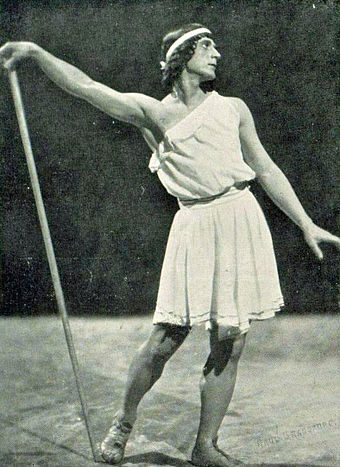
MIchel Fokine, in the role of Daphnis
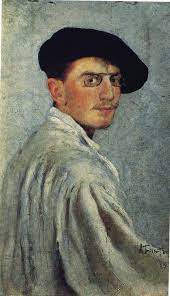
Léon Bakst
A Dream Team of Dance?
Impresario Sergei Diaghilev, variously described as a “dictator, devil, charlatan, sorcerer, and charmer” – proposed to match Ravel’s music with the creative team of dancer/choreographer Michel Fokine and costume and set designer Léon Bakst.
In 1909, Fokine became the resident choreographer of the first season of the Ballets Russes. He first created a ballet of Nikolai Rimsky-Korsakov‘s Scheherazade, and Bakst designed the set and costumes. The trio next produced Stravinsky’s Firebird in 1910 to cement their reputation.
Critic James Keller: “The Ballets Russes—with Diaghilev as director, Michel Fokine as choreographer, Léon Bakst as designer—had arrived in Paris in 1909, and a commission from the company was a signal that a composer had arrived at the summit of cultural life in the city that prided itself as the summit of culture.”
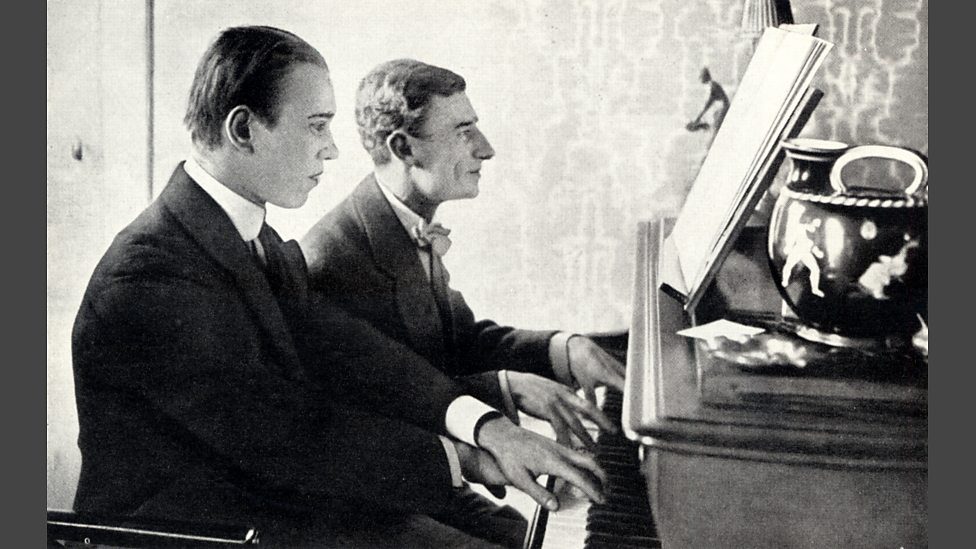
Maurice Ravel & Vaslav Nijinsky in 1912.
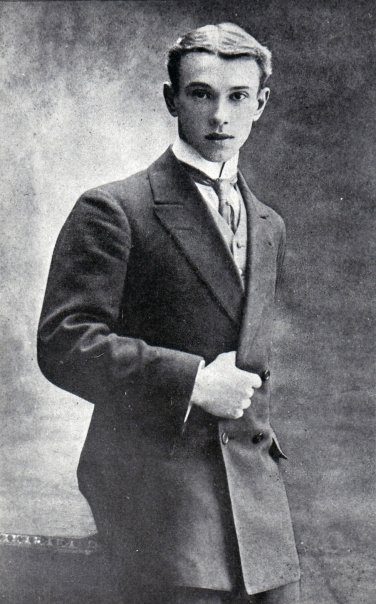
Vaslav Nijinsky, teen heartthrob.
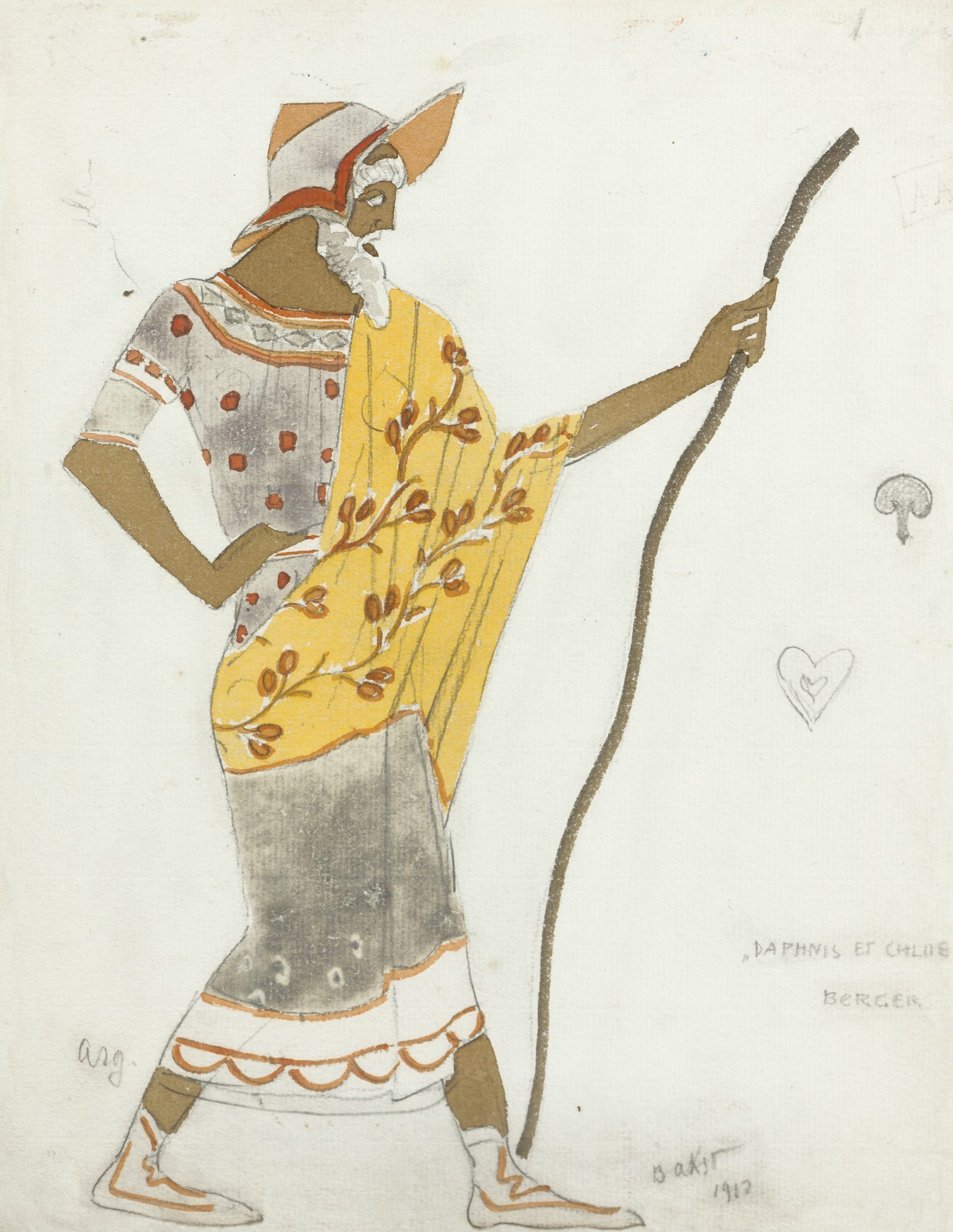
Original costume design for Daphnis by Bakst, recycled from another Greek ballet, and out-of-step with Ravel’s sumptuous music.
“Creative Differences” & the Nijinsky Factor
But things quickly turned sour for this “Dream Team.” Fokine and Bakst were interested in the “Greece reconstructed by researchers, rather than as romanticized by French painters.” Along the lines of Stravinsky’s Firebird and Rite of Spring, they envisioned a tale “of literal archaism in terms of Greek pagan dance with an erotic physicality.”
Thus Ravel and Fokine had bitter disagreements, compounded by a language barrier. Ravel wrote, “What complicates things is that Fokine doesn’t know a word of French and I only know how to swear in Russian. In spite of the interpreter, you can imagine the savor of these meetings.” Ravel was also a notoriously slow worker, much to Dighilev’s frustration.
Fokine was having an even harder time with Diaghilev, who had chosen the young heartthrob Vaslav Nijinsky to replace him as the principal male dancer in the company. Fokine complained bitterly that the gay Diaghilev’s more-than-professional interest in Nijinsky was compromising the reputation of the Ballets Russes.
Bakst also had deadline issues, so the wound up recycling the scenery and outfits he had crafted for Narcissus, another Greek-themed ballet mounted the previous season. The sets and costumes were wildly discordant with Ravel’s music. The original production lasted for just two performances, and a revival a year later was completely eclipsed by the scandalous premiere of The Rite of Spring!
Further Reading & Resources
The Bookshelf
The Playlist

The go-to book, first published in 1975, for learning about Ravel, his music, and his life and times by author and musicologists Abbie Orenstein, one of the world’s leading authorities on the French composer’s music. “This book remains the standard biography — detailed, alert to the historical milieu and cultural background of Ravel’s music, rich in quotations drawn from his letters and filled with information gathered in the author’s many interviews with the composer’s friends”.
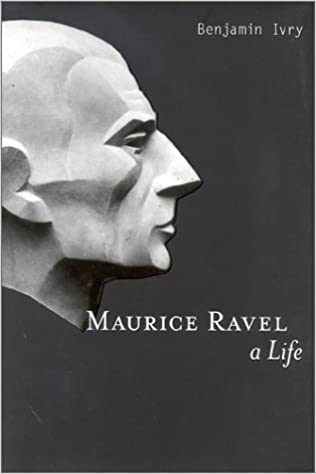
25 years later, author Benjamin Ivry delves into Ravel’s personal life for clues about his music. Library Journal: “There seems to be little question that Ravel was an affected, intensely secretive dandy with gay inclinations (he was clearly attracted to many aspects of the gay Parisian subculture, such as its fascination with the Greek god Pan). Too often, though, the evidence that his homosexuality has any bearing on his artistic output is thin or nonexistent. Nonetheless, this is an enjoyable read, as Ivry’s prose is lively, empathetic, and quite often insightful.”

The NPR Guide To Building a Classical CD Collection
Yes, hardly anyone buys new CDs anymore, but there are plenty to be had (including at the Heifetz Music Shop), and they are bargain priced! To help you sort through the choices on the 250 “core works” of classical repertory, look now further than this highly readable and exquisitely selected works and recommend recordings by longtime NPR commentator Ted Libbey. It’s the only guide you’ll need!
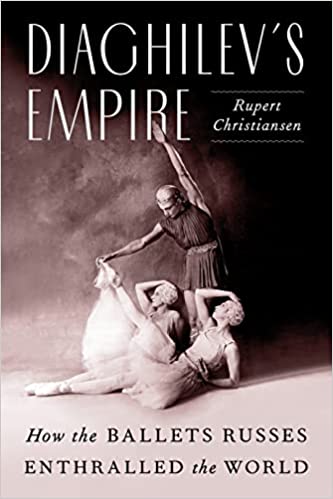
Diaghilev’s Empire: How the Ballets Russes Enthralled the World
Hot off the presses! Longtime British arts journalist and dance critic Rupert Christiansen has a brand-new book about the impresario whose name will come up time and time again in this survey. “Diaghilev’s Empire, the publication of which marks the one hundred fiftieth anniversary of Diaghilev’s birth, is a daring, impeccably researched reassessment of the phenomenon of the Ballets Russes and the Russian Revolution in 20th-century art and culture.”
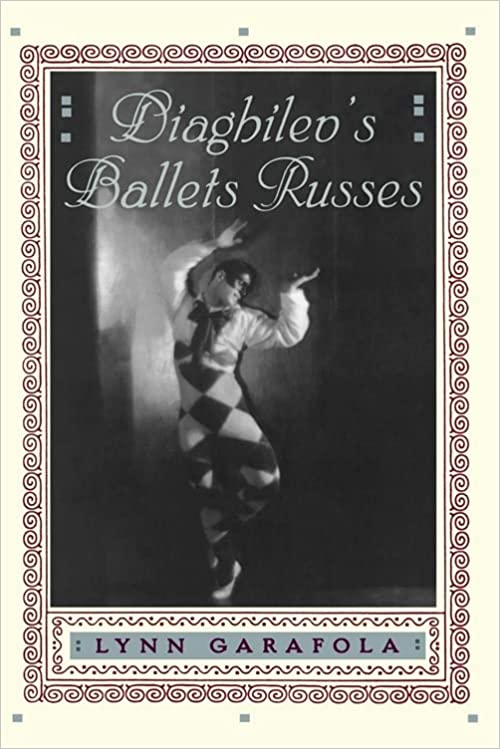
From 1998, author Lynn Garafola’s book is a bit dry but packed with facts and information: “Diaghilev’s Ballets Russes is the most authoritative history of the company ever written and the first to examine it as a totality—its art, enterprise, and audience. Combining social and cultural history with illuminating discussions of dance, drama, music, art, economics, and public reception, Lynn Garafola paints an extraordinary portrait of the company that shaped ballet into what it is today.”

This is Your Brain on Music: The Science of an Obsession
Not necessarily about Ravel, (though see the juicy quote above), Daniel J. Levitin’s landmark 2007 book is a must-read for any music fan, regardless of their musical genre of choice. It will help you understand both the conscious and subconscious ways we are attracted to music.
Tableau I: Introduction
Tableau I: Entrance of Daphnis et Chloé
Tableau I: Entrance of Daphnis et Chloé
Tableau I: Dorcon's Grotesque Dance
Tableau I: The Graceful Dance of Daphnis
Tableau I: Lyceion's Veil Dance & Invasion of the Pirates
Tableau II: Introduction: The Pirate's Camp
Tableau II: Chloé's Dance of Supplication
Tableau II: War Dance of the Pirates
Tableau III: Daybreak
Tableau III: Pantomime of Pan & Syrinx
Tableau III: Bacchanal ("Danse générale")
Videos
A supberbly captured BBC broadcast of the Royal Ballet production of Daphnis and Chloe choreographed by the legendary Frederick Ashton, from the re-opening Galla of Covent Garden, London.
The Gracious Dance of Daphnis – All that’s missing is the top hat in this mesmerizing dance that transforms the innocent goatherd into a cultivated, cosmopolitan French boulevardier!
The original 1912 Ballet Russes production of Daphnis and Chloe ran for just two shows, undermined, among other things, by choreography and set design wildly incongruous with Ravel’s sensuous music. Modern productions tend to be both a lot more faithful to Ravel’s vision, and a lot sexier, as you’ll witness in this recent Ballet Monte Carlo version!